
A travel story may have a gripping introduction, but if the paragraphs feel disconnected, readers disengage – they hop off the train and stop travelling with you. Strong paragraph links create momentum, encouraging readers to keep moving through the story. This travel writing guide features nine ways to link paragraphs effectively
Continue a theme

Carrying a theme through several paragraphs before transitioning to another part of the story is a simple way to ensure rhythm and cohesion. Many writers practise this without realising.
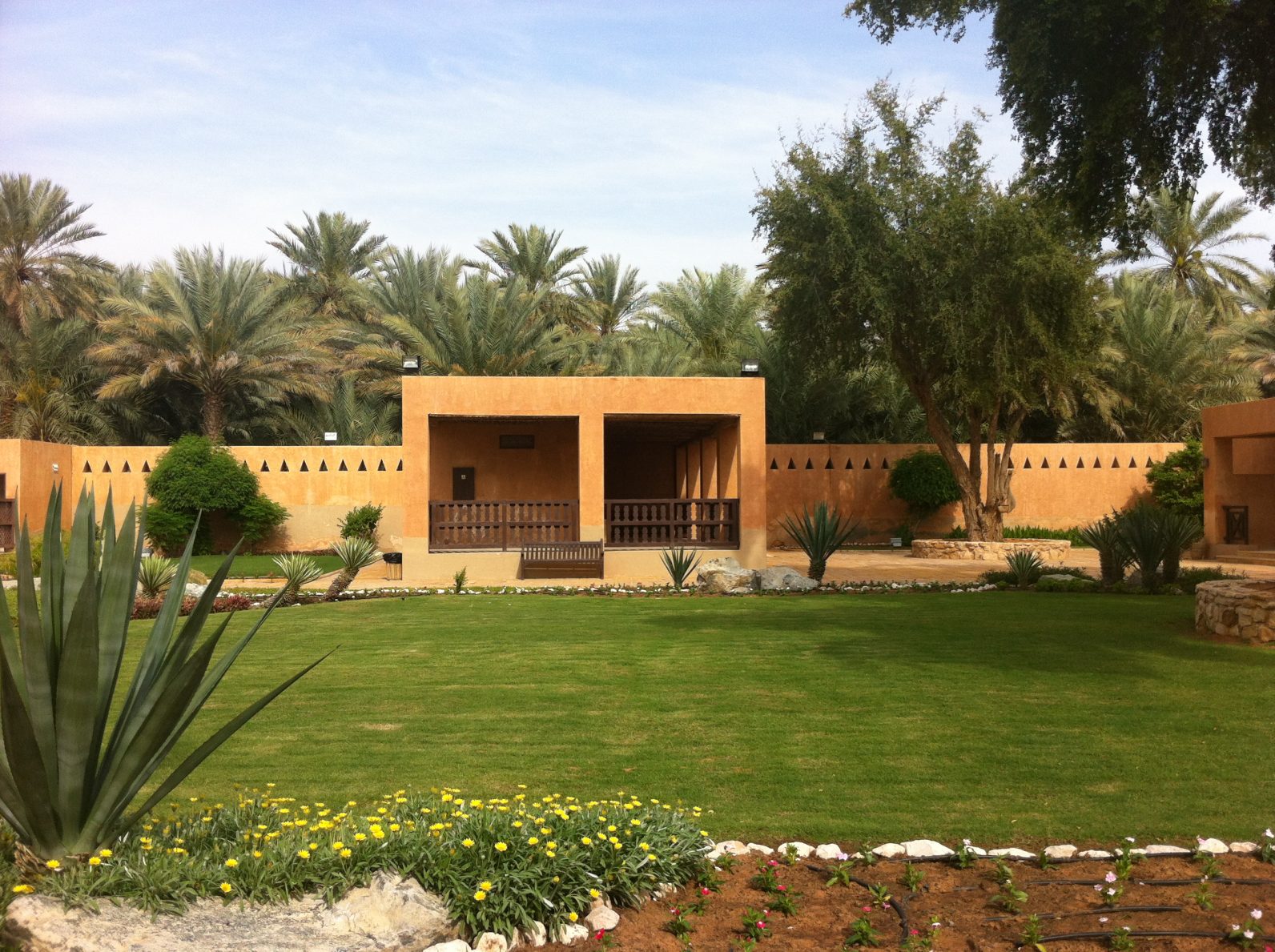
While writing about Al Ain in the United Arab Emirates for Wanderlust, I wrote:
“‘Dubbed the ‘Garden City,’ Al Ain boasts an abundance of parks, leafy boulevards and springs – unique in a region that’s otherwise as withered as a forgotten houseplant.”
I then continued with the water/nature theme in the following paragraph:
“More than 200 springs feed the 147,000 date palms and mango, fig and sidr trees in Al Ain Oasis, which sprawls across an area the size of London’s Heathrow Airport.”
Use connecting words

Connecting words are another easy method of linking paragraphs and subtly guiding readers between ideas.
These include: however, but, yet, meanwhile, instead or therefore, and so on.
When writing about a Swiss ski resort for Homes & Antiques, for example, I opened with:
“A sense of anticipation hangs in the air as engines rev and rumble. And then they’re off. Vintage Bentleys, Ferraris and Aston Martins slide across the frozen lake, powder snow spraying in their wake. Spectators dressed to impress in mirrored sunglasses, furry ushanka hats and diamonds glinting in the winter sun erupt with applause. The ICE classic car show was launched in St Moritz in the Swiss Alps in 2019…”
Then I delved into the town’s history:
“But it is a Swiss doctor known as Paracelsus who’s credited for putting St Moritz on the map.”
A travel writing guide: Link through time

Similarly – which is another connecting word – travel writers often link paragraphs according to time.
One paragraph might describe the morning, while the next progresses into the afternoon.
You could also use words and phrases such as ‘after lunch’, ‘later that day’ or ‘the next morning.’
When writing about a tall ship cruise around the Caribbean for the Independent, I dedicated a section to Dominica and the next to another island:
“The next day, we moor among catamarans off Terre-de-Haut. Just two square miles, the island is part of the French-speaking Guadeloupean archipelago Îles des Saintes.”
Jolt to another topic or period of time

Breaking a story’s flow is a powerful technique when used occasionally – perhaps only once in a travel article.
A sudden shift in topic, location or period of time is a dramatic way to shake things up.
This method is usually accompanied by a crosshead – often an H3 subheading in online stories – which tells readers they’re entering a new phase of the story.
I applied this approach in a story for World of Cruising, when switching from a bike ride one day to a hike the next:
“No one’s around, only two farmhouses, their shutters closed, and a few butterflies dancing on the breeze. Fields of sunflowers turn their smiling faces to the sun.”
RED, RED, WINE
“After a good night’s sleep, the next day I join guide Geraldine on a five-kilometre hike from Tournon to the famous vineyard of Tain-l’Hermitage.”
A travel writing guide: Link through movement

Whether you’re meandering around a Moroccan market or cruising through Canada’s North West Passage, take readers along with you.
Use your movement as a bridge between paragraphs. This technique is especially effective in city guides, road trip narratives or hiking, rail and cruise journeys.
This worked in my story about cruising up Greenland’s west coast for World of Cruising:
“It may be midnight but I’m full of beans as AE Expeditions’ Sylvia Earle sails through Sondre Stromfjord’s barren cliffs, beneath cobalt skies.”
“I arrive in Sisimiut, a fishing town 40km or so north of the Arctic Circle in west Greenland.”
Ask a question in one paragraph and answer it in the next

Stimulating curiosity is an alternative linking technique.
End one paragraph with a question that naturally makes the reader want to know the answer. Then begin the next paragraph by answering it.
This approach mirrors conversation and keeps readers engaged. Here’s an example, taken from my story about London cemeteries, written for the Financial Times:
“London’s population boomed during the Industrial Revolution, and by the 1830s churchyards were overflowing. The Metropolitan General Cemetery Act (1832) recognised the need for private suburban cemeteries, and Kensal Green was the first to open. Six others followed, which, collectively, are dubbed the ‘magnificent seven’. Why magnificent?
“Because mausolea of the rich and famous, hand-carved from granite and marble, have aged as gracefully as film stars. Crooked headstones only add to the cemeteries’ charm, so it’s no wonder many have been used as film sets.”
Repeat a word or phrase from one paragraph in the next
Editors usually discourage travel writers from repeating adjectives or verbs, but conscious repetition can be an effective writing strategy.
Taking a key word or phrase from the final line of one paragraph and echoing it at the start of the next acts like a bridge between the two paragraphs.
I implemented this strategy while writing about wine for Borough Market’s Market Life. Here’s an example:
“Next, I try Tomme Crayeuse, Victoria’s favourite. ‘It’s light, creamy and quite sweet,’ she says. ‘It goes well with tomatoes, a light cider or white wine.’”
“Muriel Chatel knows a thing or two about wine…”
Use contrast to create momentum

Contrast is one of the oldest storytelling tools. Travel writers may move from noisy to quiet, crowded to empty or luxurious to basic, and the contrast itself is the transition.
I applied this method in a story about Indian villages for World of Cruising:
“Nawa means nine in Sanskrit, and deep means island, so I’m already picturing an enchanting scene as we approach the village of Nawadeep.”
“Instead, cowdung patties dry on walls to be used as fuel and I’m confronted by a cacophony of crying babies, bicycle bells and hammers on metal mingled with the blaring of loudspeakers. “There’s a festival going on,” Malini shouts over the racket.”
A travel writing guide: A final thought on linking paragraphs
You can sometimes combine linking techniques, and it’s important to vary them. If you’re not sure what to use and when, study travel stories written by professional travel writers to see which methods work best and why. When you transition well, readers won’t notice.
Not sure where to begin? Then read my travel writing guide on how to introduce a travel story.